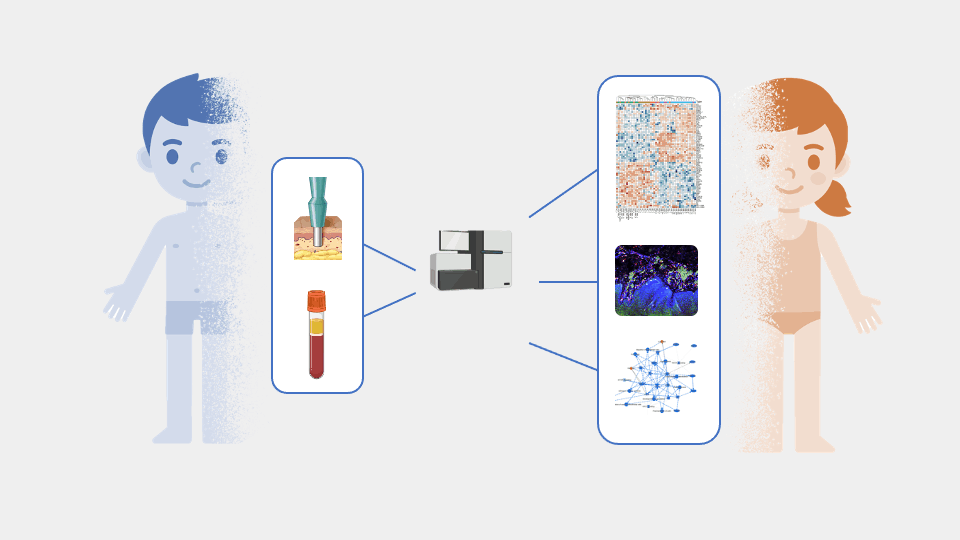
We combine molecular disease mapping, high-resolution immune profiling and translational research to uncover pathogenic mechanisms and develop precision and mechanism-based therapies.
We use deep molecular profiling of patient-derived skin and blood to define disease-associated immune states, identify pathogenic pathways and uncover biomarkers of treatment response.
Building on our work in individual inflammatory skin diseases, we established SKIMPRINT, a multi-disease molecular profiling platform designed to map the cellular and molecular architecture of inflammatory and autoimmune skin disease across large patient cohorts. By integrating transcriptomic, spatial and clinical information across diseases, SKIMPRINT enables us to identify shared and disease-specific pathways, molecular endotypes and candidate therapeutic targets.
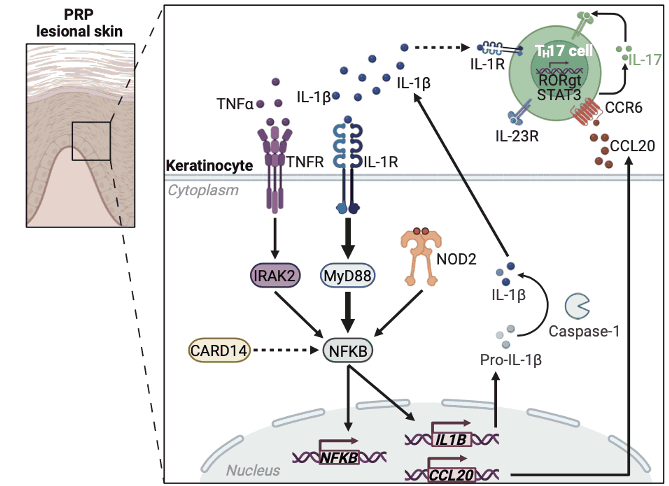
This approach has already demonstrated its translational potential. In pityriasis rubra pilaris, molecular profiling identified a distinct inflammatory program centered on an NF-κB–IL-1β–CCL20 axis. Targeting IL-1 subsequently resulted in rapid clinical improvement in treatment-refractory patients together with reversal of the disease-associated molecular signature (Science Advances).
This project led to an international collaborative follow-up investigation with the largest PRP cohort worldwide.
Similarly, in pyoderma gangrenosum, we identified IL-1β as an important inflammatory driver, providing the rationale for one of the first clinical studies of IL-1 blockade with canakinumab in this disease (British Journal of Dermatology).
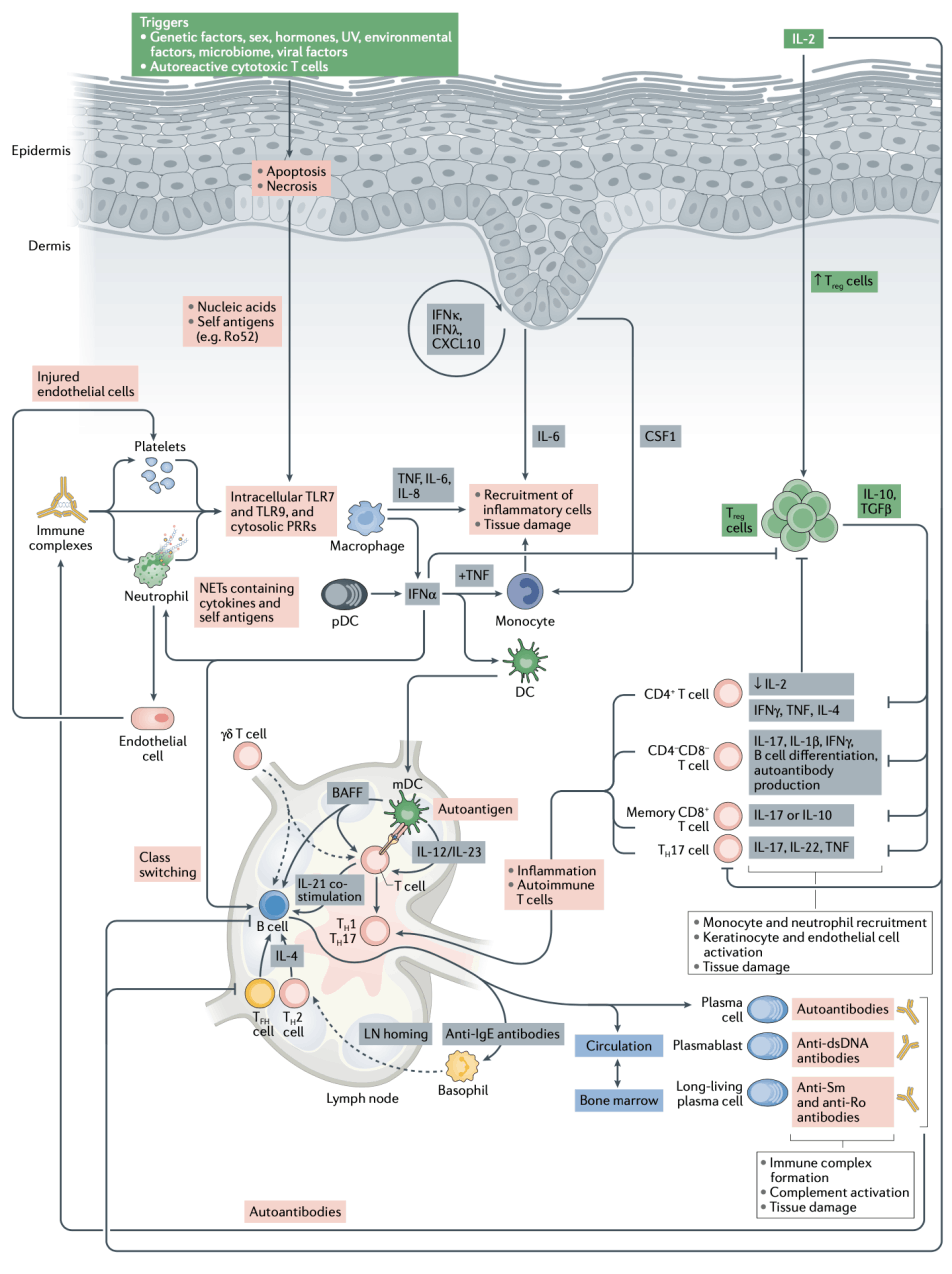
A second major focus of our laboratory is understanding why immune tolerance fails in autoimmune disease and how it can be restored therapeutically. We particularly investigate the balance between pathogenic effector T cells and regulatory T cells, their clonal architecture and their interaction with diseased tissue. We summarized approaches for restoration of immune tolerance in Nature Reviews Rheumatology and Trends Molecular Medicine.
Molecular states identified through SKIMPRINT and our prospective patient cohorts are linked to high-resolution immune profiling using single-cell RNA sequencing, TCR sequencing, spatial transcriptomics, spectral flow cytometry and functional assays. This allows us to move from descriptive tissue signatures to the immune cell populations and clonotypes that drive disease.
In vitiligo, we are applying this approach to identify disease-associated T-cell clones, determine their antigen specificity and investigate strategies for antigen-specific restoration of immune tolerance. More broadly, we are studying approaches that expand or reprogram regulatory T cells to achieve durable immune control.
We recently summarized reported deficiencies in regulatory T cells in vitiligo in Regulatory T Cells and Autoimmune Diseases.
We aim to translate mechanistic insights into therapeutic strategies that modulate pathogenic immune responses and restore immune regulation.
We showed that gluconolactone, a pentose phosphate pathway-associated metabolite, has immunomodulatory properties, reshaping inflammatory T-cell responses, promoting regulatory T-cell function and ameliorating disease in experimental models of autoimmunity. Subsequently, in patients with cutaneous lupus, we provided evidence of its therapeutic potential. This work was published in Science Translational Medicine. We are now investigating its therapeutic potential further.
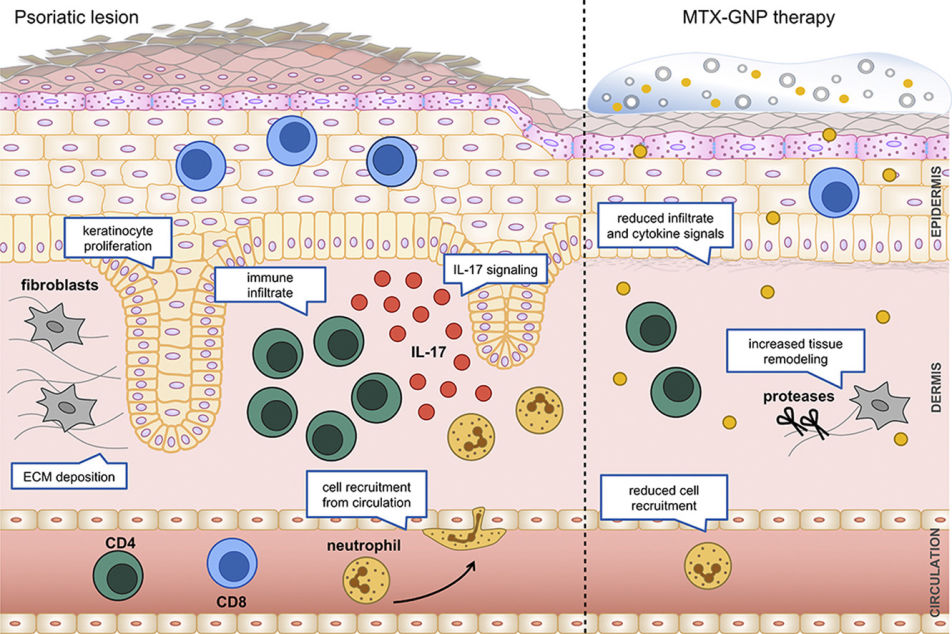
Our previous work has also explored targeted drug-delivery strategies, including methotrexate-conjugated gold nanoparticles for the treatment of psoriasis (Journal of Investigative Dermatology).

Li W*, Kolios AGA*, Pan W, Burbano C, Karino K, Vichos T, Humbel M, Kyttaris VC, Tsokos MG, Tsokos GC.
Sci Transl Med. 2025 Feb 19;17(786):eadp4447.

Scherlinger M*, Kolios AGA*, Kyttaris VC, Tsokos GC.
Nat Rev Drug Discov. 2025 Jul 17. doi: 10.1038/s41573-025-01242-0.

Chaker A, et al. and Kolios AGA
Allergy. 2025 Jul 9. doi: 10.1111/all.16656.

Schmauch E, Severin Y, Xing X, Mangold A, Conrad C, Johannsen P, Kahlenberg JM, Mellett M, Navarini A, Nobbe S, Sarkar MK, Satyam A, Tsoi LC, French LE, Nilsson J, Linna-Kuosmanen S, Kaikkonen MU, Snijder B, Kellis M, Gudjonsson JE, Tsokos GC, Contassot E, Kolios AGA.
Sci Adv. 2024 Jul 5;10(27):eado2365.

Kolios AGA, Tsokos GC, Klatzmann D.
Nat Rev Rheumatol. 2021 Dec;17(12):749-766.
Özcan A, Sahin D, Impellizzieri D, Nguyen TT, Hafner J, Yawalkar N, Kurzbach D, Tan G, Akdis CA, Nilsson J, Boyman O, Kolios AGA.
J Invest Dermatol. 2020 May;140(5):1003-1014.e8.

Kolios AGA, Yawalkar N, Feusi A, Kündig T, Boyman O, Nilsson J.
N Engl J Med. 2019 Nov 14;381(20):1975-1977.

Kolios AG, Maul JT, Meier B, Kerl K, Traidl-Hoffmann C, Hertl M, Zillikens D, Röcken M, Ring J, Facchiano A, Mondino C, Yawalkar N, Contassot E, Navarini AA, French LE.
Br J Dermatol. 2015 Nov;173(5):1216-23.

Yuan Y*, Kolios AGA*, Liu Y, Zhang B, Li H, Tsokos GC, Zhang X.
Trends Mol Med. 2022 Jul;28(7):596-612.

Özcan A, Collado-Diaz V, Egholm C, Tomura M, Gunzer M, Halin C, Kolios AGA, Boyman O.
Sci Immunol. 2022 Feb 4;7(68):eabi9126.

Thevan J, Schmauch E, Nilsson J, Guillet CF, Boesch A, Krähenbühl L, Meier-Schiesser B, Schmid-Grendelmeier P, Kündig T, Kolios AGA.
Dermatology. 2024 Jul 29:1-8.

Kolios AGA, Tsokos GC.
Lancet Rheumatol. 2022 Oct;4(10):e652-e654.











University of Zurich, Department of Dermatology
Wagistrasse 18, 8952 Schlieren, Zürich, Switzerland
info(at)kolioslab.com

HTML Website Builder